About · Huckleberry Restoration
About Huckleberry Restoration
Our local restoration professionals assess water damage in Post Falls and plan water removal and structural drying. Huckleberry Restoration gives homeowners a place to call about wet ceilings, walls, floors and crawl spaces.
A Call About the Damage
A call to Huckleberry Restoration about water damage in Post Falls and North Idaho connects homeowners with one of our local restoration partners in our network. Call about a pipe leak, standing water, a drain backup or moisture that has spread beyond the visible stain.
The name comes from the huckleberry, a berry that grows in Idaho's mountain forests.
A practical starting point
The call starts with your address and a description of the damage. Explain which rooms are affected, whether water is still entering and what you have noticed. You can call while the cause is uncertain. Finding hidden moisture belongs to the inspection, rather than to a homeowner's guess from the doorway.
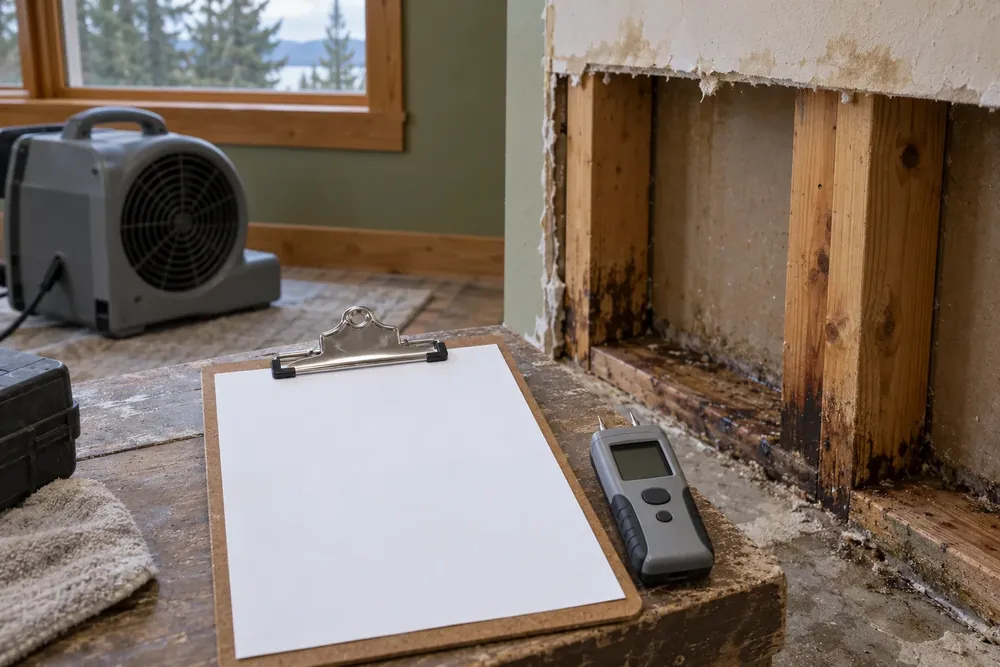
Your technician arranges the visit with you and explains the proposed work. The inspection looks at the source, the wet materials and the paths water has taken through the building. A dry-looking floor can still have moisture beneath the surface, so measurements matter alongside visible damage.
Clear explanations of the work
Huckleberry Restoration explains water removal, material removal, drying and the repairs that follow. Service pages cover problems such as ceiling water damage and water beneath flooring. Those pages help you put words to the condition you are seeing.
The guides cover first steps, drying time, cost factors and documentation for insurance. Read them when useful; reading is not a requirement for calling. A short description of the damage gives the conversation a starting point.
A scope you can review
The proposed scope and price are explained before you authorize work. Ask about equipment, moisture checks, removal of wet materials and the boundary between drying and repair. A written scope makes those decisions easier to follow.
Photos and moisture readings record conditions at the property. They support an account of the damage without deciding insurance coverage. The aim is a clear sequence: identify the source, assess the wet structure, explain the work and measure drying progress before closing surfaces.