Call for cleanup as soon as water reaches building materials, and take only the safety steps that the room allows. Extraction, cleaning, and drying follow an inspection of the source and the affected surfaces.
Your house is flooded: what to do first
Stay on dry ground and keep clear of wet electrical equipment. Do not enter standing water to reach a breaker panel, unplug an appliance, or retrieve a phone. A dry floor does not make a wet outlet safe to touch. Have electrical hazards assessed before anyone uses powered equipment in the affected space.
A short safety check can happen while you arrange help:
- Keep children and pets outside the wet room.
- Leave the building if you smell gas, and call emergency services from outside.
- Keep the route to an exit clear without moving wet electrical devices.
What to do if water pipe bursts occur
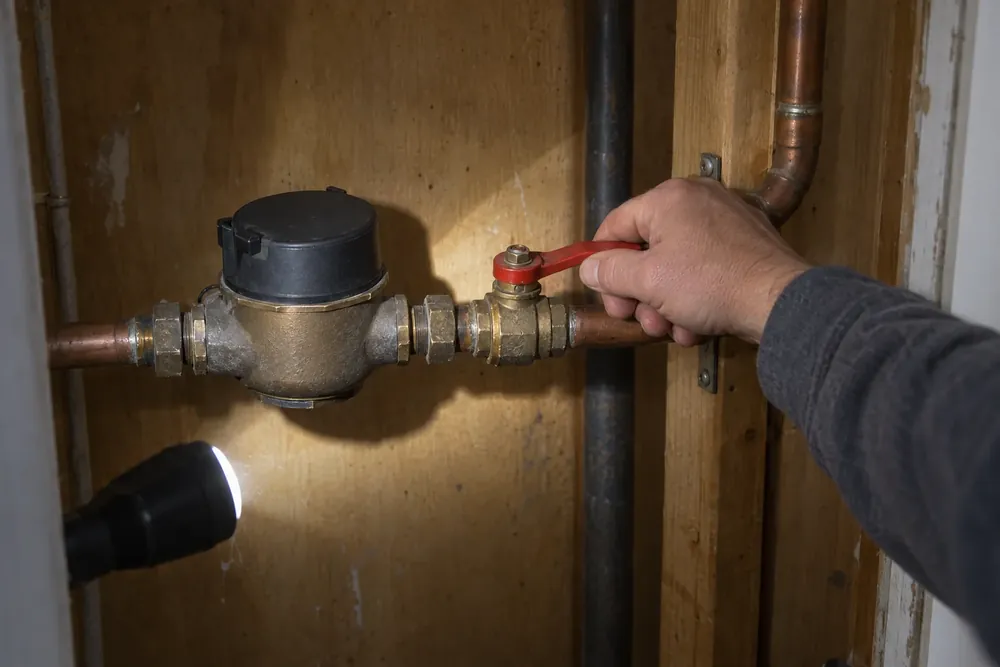
Close the household main water valve if you can reach it safely. An accessible fixture valve may stop a leak confined to one appliance or sink. Do not force a stuck handle or enter a flooded utility space to find the shutoff.
Tell the person answering the restoration call whether water is still flowing. A plumber repairs the failed pipe; restoration addresses the water already in drywall, insulation, flooring, and framing. Closing the valve limits additional damage but does not remove trapped moisture.
Flooded house: what to do with valuables
Move small belongings only where you have safe footing and a dry destination. Lift documents, medication, and portable valuables away from a clean-water leak without touching wet plugs or cords. Leave heavy furniture in place until someone can assess access and floor stability.
Photograph the room from the doorway, then take closer pictures only where entry is safe. Capture the water source, wet floor edges, and damaged belongings. Photos support documentation for insurance; they do not establish coverage. Keep receipts and record what you noticed during the call.
What to do about ceiling water damage
Keep everyone out from beneath a bulging or sagging ceiling. Do not puncture swollen drywall or climb a ladder under it. Water may have spread beyond the stain into insulation or around a light fixture.
Describe the ceiling's shape, active drips, and the room above it during your call. Your technician needs to assess stability and hidden moisture before ceiling material is opened.
What to do when flooded house contents are contaminated
Leave sewage-soaked belongings undisturbed and keep people away from the affected room. For sewage or other contaminated water, call a professional experienced in cleaning and repairing affected buildings, as EPA recommends. Do not spread the water through adjoining rooms with mops.
Do not run the furnace fan over wet or contaminated materials as a drying shortcut. If floodwater reached ducts or furnace components, keep the system off until it has been assessed. Airflow can carry contamination into other rooms. Your technician selects extraction and drying methods after evaluating the water source.
Describe the damage during the call
Give your address, the affected rooms, and any hazards you can see from safety. One of our local restoration partners will explain the proposed work and its cost before cleanup begins. You do not need a completed checklist to call. For the next stage, read about emergency water removal.