
Guide · Water damage at home
How Long Does Water Damage Take to Dry?
Our local restoration professionals carry out structural drying in Post Falls, ID using air movers, dehumidifiers, and moisture checks. Drying often takes several days, with the finish determined by readings inside affected materials.
Drying ends when materials reach their targets
- Water damage drying often takes several days, and extensive flooding can leave materials wet for weeks.
- Cold conditions, high humidity, thick materials, and water trapped beneath flooring can lengthen the drying period.
- Your technician uses moisture measurements to judge progress and completion because a dry surface does not establish that concealed layers are dry.
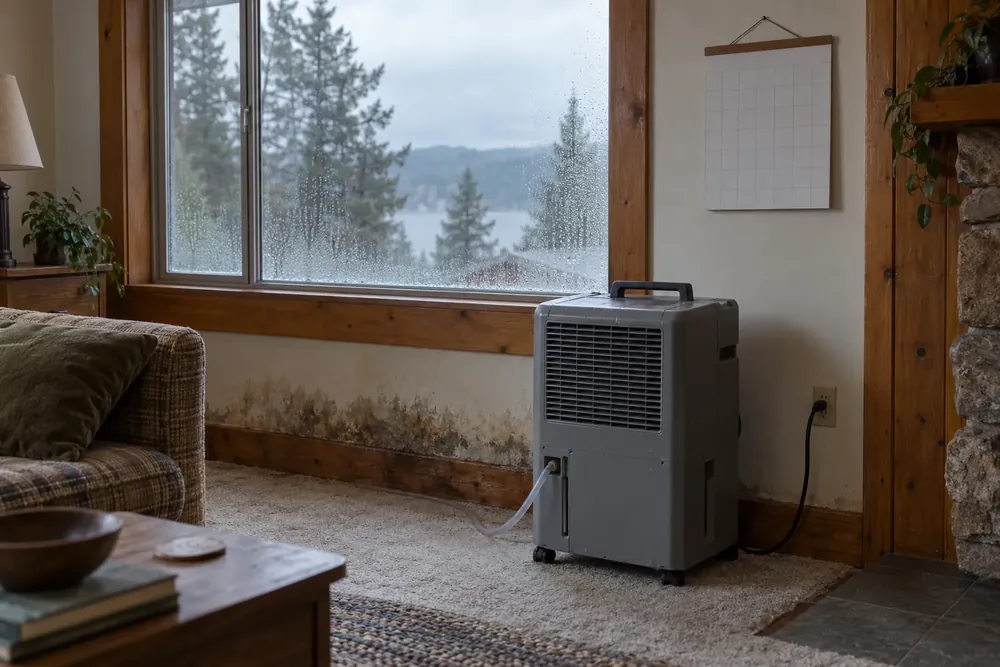
The drying stages and checks
Drying moves from water removal to controlled airflow and repeated moisture checks. The equipment may run for several days, but the calendar alone cannot show whether the subfloor or wall cavity is ready to close. Call about the affected rooms as soon as you notice water.
Removing water and finding wet layers
Extraction removes standing water before the remaining moisture can be dried from building materials. Your technician checks where water traveled, including floor edges, baseboards, and adjoining spaces. Water can spread beneath a floor covering beyond the visible wet patch.
The inspection also separates materials that can be dried from those requiring removal. Swollen drywall, wet insulation, or flooring that blocks access may change the scope. The water source must be controlled during the work so new water does not replace what is removed.
Setting airflow and humidity control
Air movers carry moisture away from exposed surfaces, and dehumidifiers remove moisture from the room air. The equipment works together. A fan alone may move damp air without removing enough water from the space.
One of our local restoration partners outlines the drying setup, access needs, and cost before equipment is placed. Your technician explains which doors or windows should stay closed for the planned setup. Ask about equipment noise and access to rooms during the work.
Conditions that slow drying
Cold materials generally release moisture more slowly than warm materials. High indoor humidity also slows evaporation. Temperature and humidity measurements help your technician adjust the drying conditions rather than relying on how comfortable the room feels.
Material thickness and access matter too. The face of a floorboard can dry while moisture remains underneath. Carpet backing, padding, and the subfloor need attention as separate layers. Enclosed wall cavities or floor coverings may prevent airflow from reaching the wet surface.
Measuring progress and completion
Repeated moisture measurements show whether affected materials are drying and where moisture remains. Your technician uses a moisture meter suited to the material and records readings at the areas being checked. Air humidity readings alone cannot establish that a wet sill plate is dry.
Drying is finished when the affected materials meet the drying targets for the job. Before repairs begin, ask your technician to explain:
- Which materials were measured and where.
- How the readings changed during drying.
- Which areas still need drying or removal.
- What records show the materials are ready for repair.
Painting over damp drywall or covering a wet subfloor traps the problem beneath a new finish. The structural drying service covers moisture removal and checks before rebuilding.
How long does water damage restoration take?
Restoration takes longer than drying alone when material removal and rebuilding are needed. Inspection, extraction, and later repairs each affect the full schedule.
How long does water damage repair take?
Repair time depends on what needs replacement after drying, including drywall, trim, flooring, and finishes. Your technician can explain the current drying progress; the repair schedule follows the remaining scope.
How long does it take for mold to grow?
Wet materials can support mold growth within 24 to 48 hours, depending on conditions. EPA guidance urges prompt drying within that period to reduce the risk.
The prevention window is not a promise that an entire building will dry in two days. A prolonged drying job needs active moisture control and attention to materials that cannot be dried promptly.
Call about damp walls or floors to discuss the drying stages and the moisture checks your home needs.
Call (208) 877-4177