
Skip to content
Water damage emergency? Calls answered 24/7(208) 877-4177
Huckleberry Restoration Call (208) 877-4177
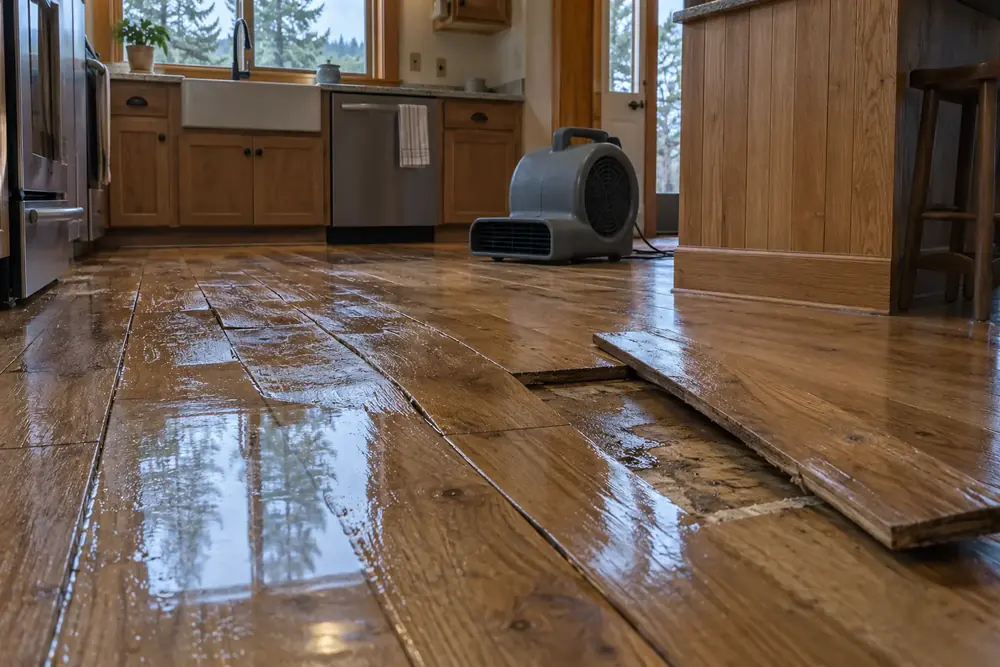
Cupped oak floorboards beside a kitchen island, with one board lifted above a damp subfloor.

Post Falls, Idaho · Restoration services

Water-Damaged Floors in Post Falls, ID

Our local restoration professionals remove water and dry affected flooring in Post Falls, ID, checking the carpet backing, floorboards and subfloor for trapped moisture. Your technician measures the wet layers before deciding what stays, what needs lifting and where drying equipment belongs.

  • Calls answered 24/7
  • Subfloor moisture checks
  • Scope explained before work

Floor cleanup and drying

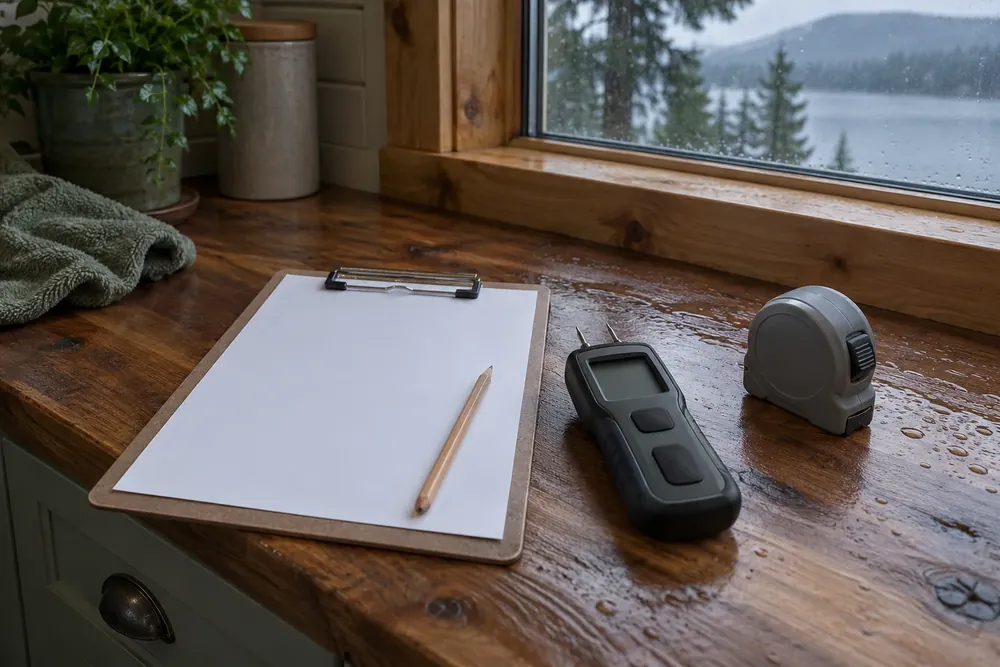
  • Moisture mapping: Your technician checks floor coverings and accessible subfloor with a moisture meter. Readings help identify wet areas beyond the visible puddle.
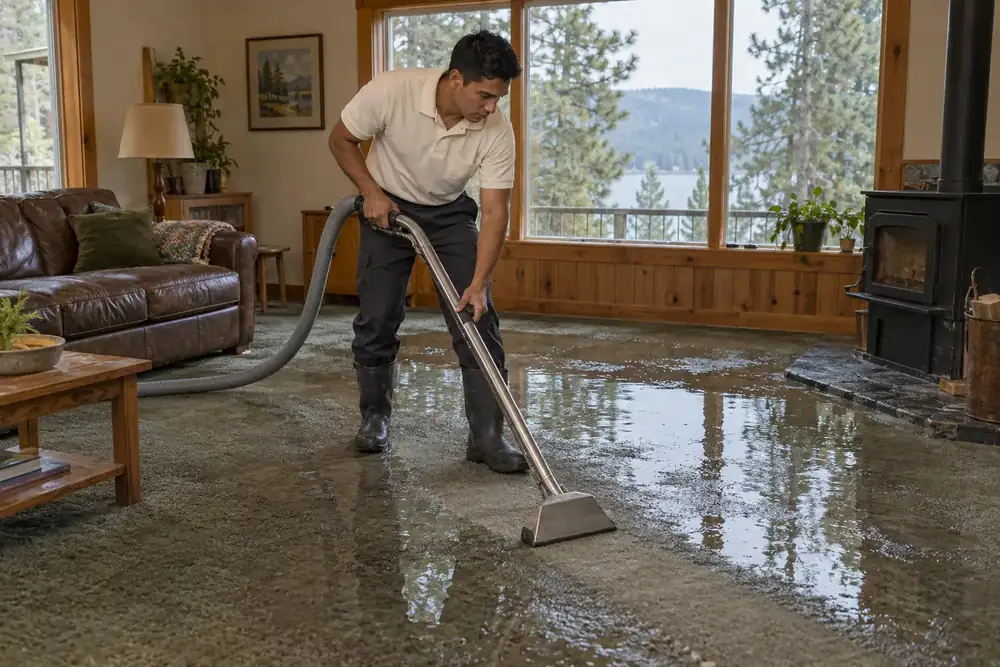
  • Surface extraction: Water removal from carpet uses an extraction wand to pull out liquid before drying begins. Hard flooring receives extraction suited to its surface and condition.
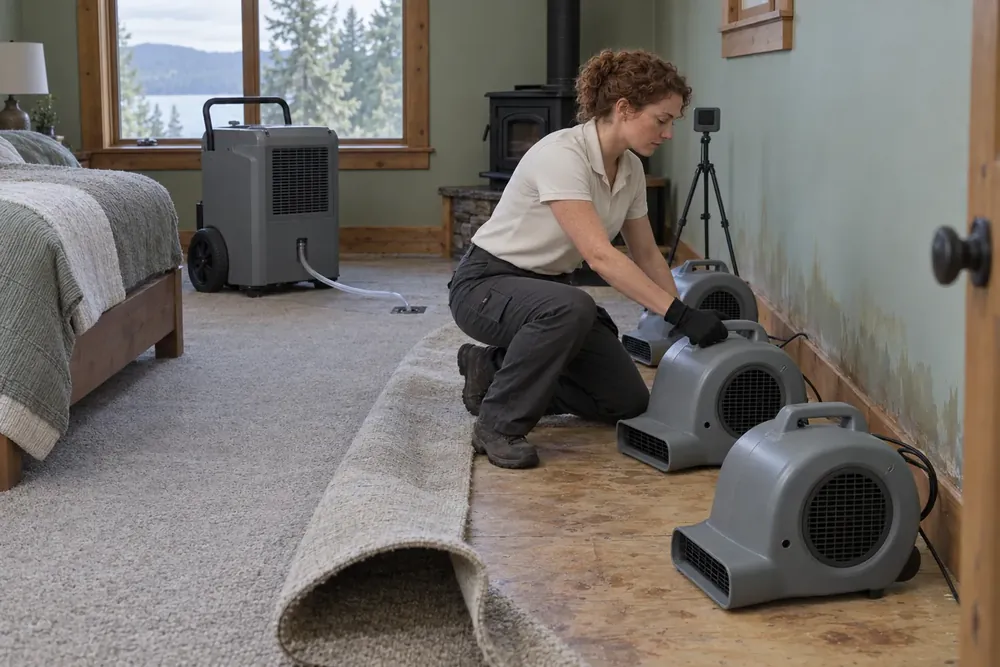
  • Access beneath flooring: After water removal, carpet padding is inspected for saturation and contamination. Floor coverings are lifted where trapped moisture cannot otherwise be reached.
  • Controlled drying: Air movers and a dehumidifier dry materials selected for retention after the water source is assessed. Hardwood needs controlled conditions rather than concentrated heat.
  • Progress records: Follow-up readings show whether the flooring and subfloor are approaching the drying target. Photos and a written scope record removal decisions and remaining repairs.

Floor changes worth a call

  • Call when hardwood edges rise above the center of each board or seams begin lifting.
  • Wet socks, squelching carpet or a damp pad mean the surface needs inspection.
  • A musty smell can point to water damage under carpet even when the pile feels dry.
  • Soft spots, swollen laminate joints or loose vinyl suggest moisture beneath the covering.
  • Water escaping an appliance or supply pipe can spread under cabinets and into adjoining rooms.

From the call to dry flooring

  1. Call and describe the floor surface and where water is visible. Share observations during the conversation without walking into an unsafe room.
  2. Your technician assesses the source, checks contamination and maps moisture in the flooring layers. The inspection sets the removal and drying scope.
  3. Extraction removes standing water; damaged padding or coverings are lifted as needed. Drying equipment is positioned to reach retained materials and the exposed subfloor.
  4. Moisture readings are checked against the drying target before equipment is removed. The final record identifies dry materials and any flooring replacement or finish work still needed.

What affects water damage floor repair cost

Flooring type, wet area and access beneath the covering determine much of the cleanup scope. Solid wood, engineered boards and carpet have different removal and drying needs. Contaminated water adds material disposal and cleaning steps; moisture beneath cabinets can require more access work.

One of our local restoration partners will explain the proposed floor work and its price before starting. The written scope should distinguish extraction and drying from replacement boards, new padding and finish repairs. The restoration cost guide explains the factors behind those separate parts of the job.

Blank inspection sheet, pencil, moisture meter and tape measure on a damp cedar countertop

A clear plan for wet floors

  • An open call line: Calls are answered around the clock, including when a leak appears after the household has gone to bed.
  • Local restoration professionals: Your technician assesses the floor layers and explains how the drying plan reaches moisture underneath.
  • Price before work: The scope separates materials being retained from materials needing removal, with pricing explained before work begins.
  • Documentation for insurance: Photos, moisture readings and the written scope document the floor damage for your insurer.

Stay clear of wet electrical equipment

Stay out of standing water near outlets, cords or appliances. CDC advises turning off the main power only from a dry location; an electrician should handle a switch that requires crossing water. Keep people away from loose boards and slippery surfaces.

EPA advises checking whether water is clean before using fans. Leave household fans off when sewage or other contamination is suspected. Avoid directing a space heater at wet hardwood; EPA cautions against heat applied to those floors.

Call from a dry room and describe the affected flooring. Photos taken without entering the wet area can document the damage.

Areas we serve around Post Falls

Local restoration professionals serve Post Falls, Coeur d'Alene, Hayden and Rathdrum in Idaho, and Liberty Lake, Spokane Valley, Fairwood and Spokane in Washington, addressing wet floor coverings and moisture beneath them.

Water-Damaged Floors FAQs

Can water damage wood floor boards beyond repair?

Yes, wood boards can sustain damage that drying alone cannot reverse. Swelling, separation between engineered layers and contamination affect whether boards can stay. Your technician checks moisture below the surface and inspects the subfloor before recommending retention or removal. A drying plan does not guarantee the original appearance will return.

Does water extraction from carpet dry the floor underneath?

Extraction removes liquid from the carpet but does not establish that the subfloor is dry. Padding and the floor beneath it need separate inspection. Your technician checks those layers and opens access where necessary. Dehumidification and follow-up moisture readings address water left after the extraction wand has passed over the pile.

How long does floor drying take?

Floor drying can take several days, with the endpoint determined by material readings rather than a fixed appointment length. Flooring thickness, trapped water and access to the subfloor affect progress. Equipment stays in use according to the drying plan. Call about the wet area so the inspection can establish a practical scope.

Can wet carpet stay in place?

Wet carpet can sometimes stay when the water is clean and the backing and subfloor can be dried thoroughly. Contamination, mold or damaged backing may require removal. EPA advises discarding porous materials that cannot be cleaned and dried. Your technician explains the decision for the carpet and padding separately.

Can I replace flooring as soon as the surface feels dry?

Replacement should wait until moisture readings support closing the floor assembly. A dry surface can cover a damp subfloor, and new flooring can trap that remaining water. Your technician records the drying condition and identifies repairs needed underneath. Replacement planning also needs to account for the flooring manufacturer's installation requirements.

Call about lifting boards, soaked carpet or a damp subfloor, and describe the floor changes you can see.

Call (208) 877-4177
Call (208) 877-4177